

Introduction
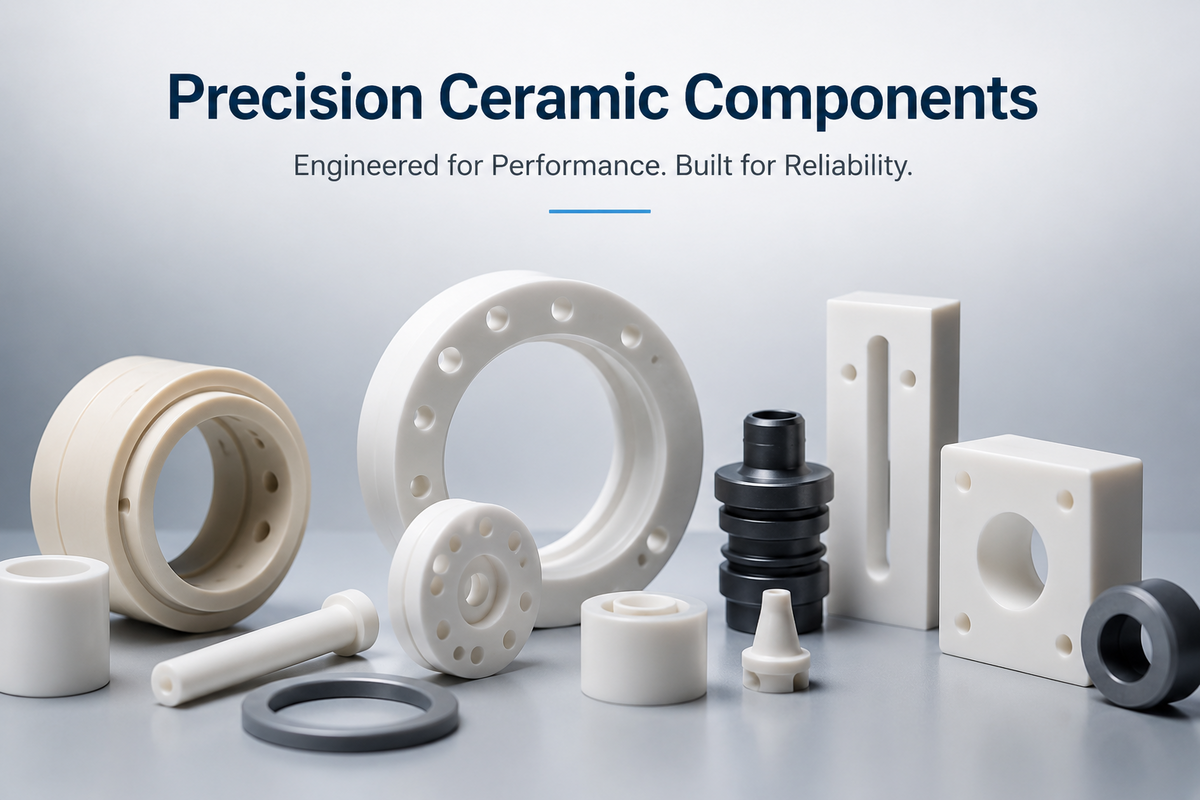
Ceramic components are often chosen for applications where ordinary metals and plastics struggle to perform. They offer excellent hardness, wear resistance, electrical insulation, and thermal stability. The challenge, however, is manufacturing them into complex shapes without sacrificing dimensional accuracy or production consistency.
Traditional ceramic manufacturing methods, such as pressing and machining, work well for many applications. But when a component has thin walls, small internal features, or a complicated three-dimensional structure, producing it efficiently can become difficult.
This is where the ceramic injection moulding process, also known as Ceramic Injection Moulding (CIM), becomes useful.
CIM combines ceramic powder technology with the flexibility of injection moulding. It allows manufacturers to produce relatively small, intricate ceramic components with repeatable geometry, making it particularly suitable for medium- and high-volume production.
For engineers and buyers, understanding how this process works is important. The quality of a finished ceramic part is not determined by injection moulding alone. Powder characteristics, binder formulation, debinding conditions, and sintering control all influence the final result.
Let's look at each stage and what really matters during production.
1. What Is the Ceramic Injection Moulding Process?
Ceramic Injection Moulding is a powder-based manufacturing process used to produce complex ceramic components.
The basic idea is straightforward: fine ceramic powder is mixed with a polymer-based binder to create a material that can flow into a mould. Once the desired shape is formed, the binder is gradually removed, and the ceramic material is sintered at high temperatures to achieve its final density and mechanical properties.
Unlike conventional plastic injection moulding, the binder is only a temporary processing aid. It does not remain as the main structural material in the finished component.
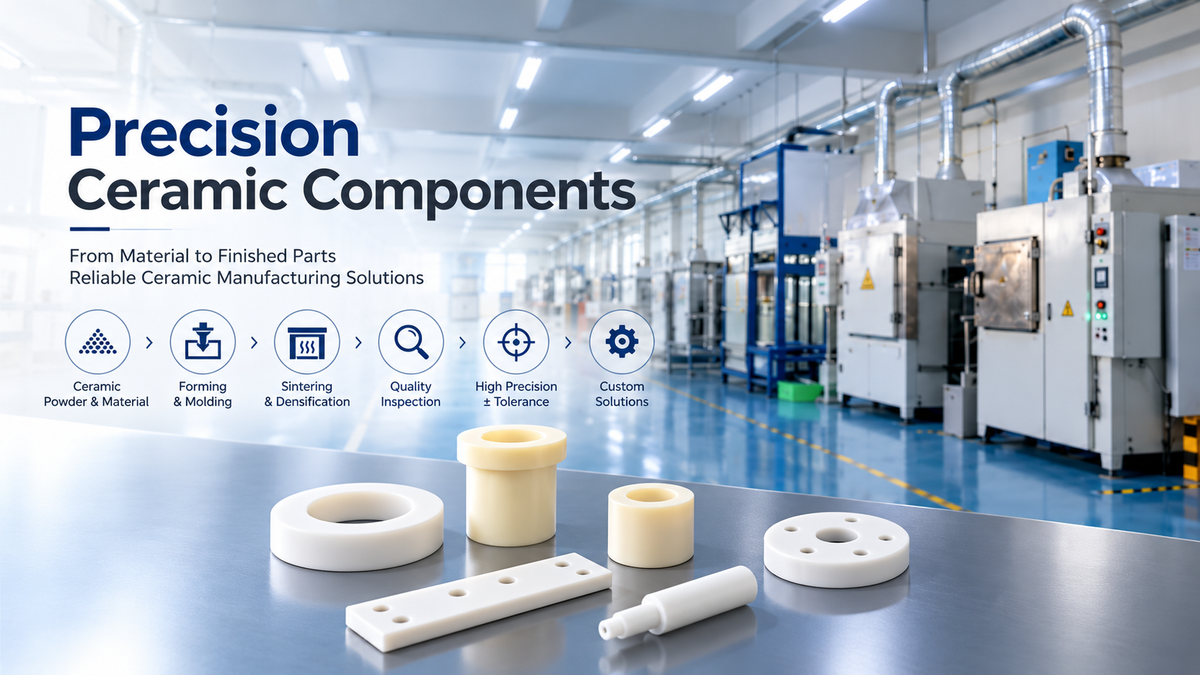
The process generally consists of four main stages:
-
Feedstock preparation
-
Injection moulding
-
Debinding
-
Sintering
Depending on the component's requirements, additional operations such as grinding, CNC machining, polishing, and dimensional inspection may follow.

2. Four Main Stages of the Ceramic Injection Moulding Process
Stage 1: Ceramic Powder and Feedstock Preparation
Everything starts with the raw material.
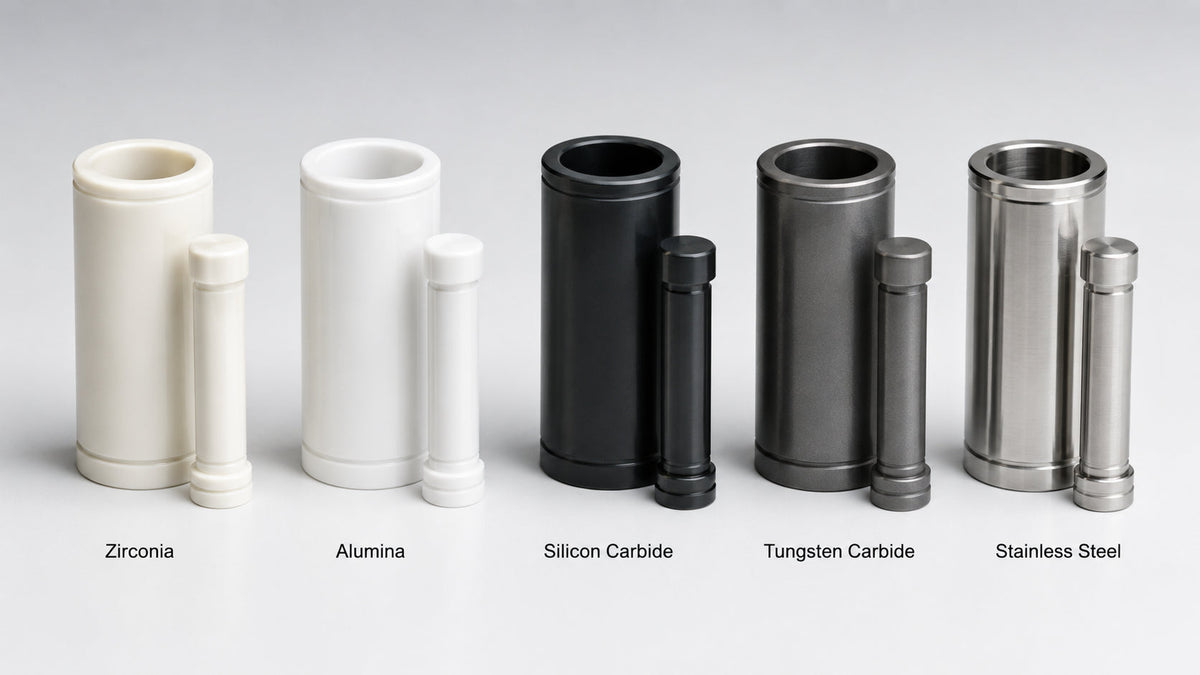
Ceramic powders such as alumina (Al₂O₃), zirconia (ZrO₂), silicon nitride (Si₃N₄), and silicon carbide (SiC) are commonly used in CIM. Each material offers different properties, so the choice depends on the component's intended working environment.
The ceramic powder is blended with a carefully formulated binder system, which may contain polymers, waxes, and other additives.
This mixture is known as feedstock.
A good feedstock needs to meet two requirements. First, it must flow consistently during injection so that the mould cavity can be filled completely. Second, it must contain a uniform distribution of ceramic particles to reduce the risk of defects during later processing.
This stage deserves particular attention because poor powder dispersion or inconsistent binder distribution can lead to uneven shrinkage, voids, and dimensional problems in the finished component.
In practical production, feedstock quality is one of the foundations of stable CIM manufacturing.
Stage 2: Injection Moulding
Once the feedstock has been prepared, it is heated until it reaches a suitable flow condition and injected into a precision mould under controlled pressure.
The mould defines the component's initial geometry, including its external shape, holes, grooves, thin sections, and other design features.
After cooling, the moulded component is removed. At this point, it is called a green part.
Although the green part has the shape of the final product, it is not yet a finished ceramic component. It still contains a significant amount of organic binder and has relatively limited mechanical strength.
Several factors influence the quality of this stage:
-
Injection pressure: Must be sufficient to fill the mould without causing excessive stress or material separation.
-
Mould temperature: Affects feedstock flow, filling behaviour, and cooling.
-
Filling balance: Helps prevent incomplete filling, weld lines, and uneven material distribution.
-
Part geometry: Wall thickness, transitions, and gate locations influence how the feedstock flows through the cavity.
For complex ceramic parts, mould design is especially important. Poorly designed gates or abrupt changes in wall thickness can create defects that become more difficult to correct after debinding and sintering.
Stage 3: Debinding
Debinding is one of the most sensitive stages of the ceramic injection moulding process.
The green part contains ceramic powder held together by the binder. Before sintering, most of this organic material must be removed.
Depending on the binder system and component design, manufacturers may use thermal debinding, solvent debinding, catalytic debinding, or a combination of methods.
During this stage, the component gradually changes from a green part into what is commonly called a brown part.
The challenge is removing the binder without damaging the ceramic structure.
If the binder is removed too quickly, internal pressure can build up and cause cracks, distortion, or surface defects. If the process is too slow or incomplete, residual binder may interfere with sintering.
For this reason, temperature, atmosphere, heating rate, and holding time must be carefully controlled.
The debinding schedule is not simply a standard setting that works for every ceramic part. It needs to match the material, binder formulation, and component geometry.

Stage 4: Sintering
After debinding, the brown part is heated to a high temperature in a controlled furnace.
During sintering, ceramic particles bond together through solid-state diffusion. The material becomes denser, porosity decreases, and the component develops its final mechanical and physical properties.
This is also the stage where dimensional shrinkage becomes a major consideration.
As the ceramic particles densify, the component becomes smaller than its original moulded dimensions. The amount of shrinkage depends on powder characteristics, feedstock composition, part geometry, and the sintering cycle.
Manufacturers must account for this behaviour when designing the mould.
Inconsistent temperature distribution or an unsuitable sintering schedule can result in warping, uneven density, cracks, or dimensional variation.
For precision components, sintering is therefore not just a heating operation. It is a critical process that connects material behaviour with final product performance.
3. What Happens After Sintering?
A ceramic component may already have most of its required properties after sintering, but that does not necessarily mean it is ready for delivery.
Some applications require additional finishing operations to achieve tighter dimensional tolerances or specific surface conditions.
Common post-processing methods include:
-
Precision grinding: Used to control critical dimensions and improve geometric accuracy.
-
CNC machining: Suitable for selected features that require additional dimensional control.
-
Lapping and polishing: Used when smooth contact surfaces, flatness, or a fine surface finish are important.
-
Drilling: Applied to specific holes and functional features where the material and geometry allow it.
-
Inspection: Includes dimensional measurement, visual checks, and other tests based on application requirements.
One important point for buyers: as-sintered dimensions and post-machined dimensions should not be treated as the same thing. If a design requires very tight tolerances, the finishing method should be considered during the initial engineering review rather than added at the end.
4. Which Ceramic Materials are Used in CIM?
Material selection should start with the component's actual working conditions, not simply the highest hardness or temperature rating.
Different ceramic materials offer different advantages.
| Ceramic Material | Main Characteristics | Typical Applications |
|---|---|---|
| Alumina (Al₂O₃) | Electrical insulation, hardness, wear resistance | Insulators, precision structural parts |
| Zirconia (ZrO₂) | High toughness, strength, wear resistance | Medical components, valves, precision mechanisms |
| Silicon Nitride (Si₃N₄) | High strength, thermal shock resistance | Bearings, mechanical components |
| Silicon Carbide (SiC) | High hardness, thermal conductivity, chemical resistance | Seals, wear-resistant components |
| Aluminum Nitride (AlN) | High thermal conductivity and electrical insulation | Electronic and semiconductor components |
The best material depends on several factors, including operating temperature, mechanical loading, chemical exposure, electrical requirements, and expected service life.
For example, alumina is often a practical choice when electrical insulation and wear resistance are important. Zirconia may be more suitable when fracture toughness and mechanical strength are priorities.
Choosing the right ceramic material early can help avoid unnecessary design changes and production costs.

5. Advantages and Limitations of Ceramic Injection Moulding
CIM is a useful manufacturing method, but it is not the best solution for every ceramic component.
Understanding both its advantages and limitations helps engineers make better process decisions.
Advantages
Complex Geometries
CIM can produce small ceramic parts with intricate shapes, thin walls, grooves, holes, and other features that may be difficult or expensive to achieve through conventional machining.
Repeatable Production
Once the mould, feedstock, and processing parameters are properly established, CIM can support consistent production across larger quantities.
Reduced Material Waste
Because the process forms components close to their final geometry, it can reduce the amount of material removed compared with machining parts from solid ceramic stock.
Suitable for Miniaturized Components
CIM is particularly useful for small precision parts where dimensional consistency and complex geometry are both important.
Limitations
Initial Tooling Investment
Custom moulds require engineering and manufacturing investment. For very small production quantities, the tooling cost may make CIM less economical.
Process Complexity
Feedstock preparation, debinding, and sintering all require careful control. A problem at one stage can affect the final component.
Sintering Shrinkage
Dimensional changes must be predicted and compensated for during mould design. Complex geometries can make shrinkage behaviour more difficult to manage.
Post-Processing May Still Be Necessary
Although CIM reduces the need for extensive machining in many applications, critical surfaces and precision features may still require grinding or other finishing operations.
6. Ceramic Injection Moulding vs. Traditional Ceramic Manufacturing
How does CIM compare with other ceramic forming methods?
The answer depends largely on part geometry, production quantity, and dimensional requirements.
| Manufacturing Method | Best Suited For | Main Consideration |
|---|---|---|
| Ceramic Injection Moulding | Small, complex parts and repeat production | Tooling and process development |
| Dry Pressing | Relatively simple shapes and larger production runs | Geometry limitations |
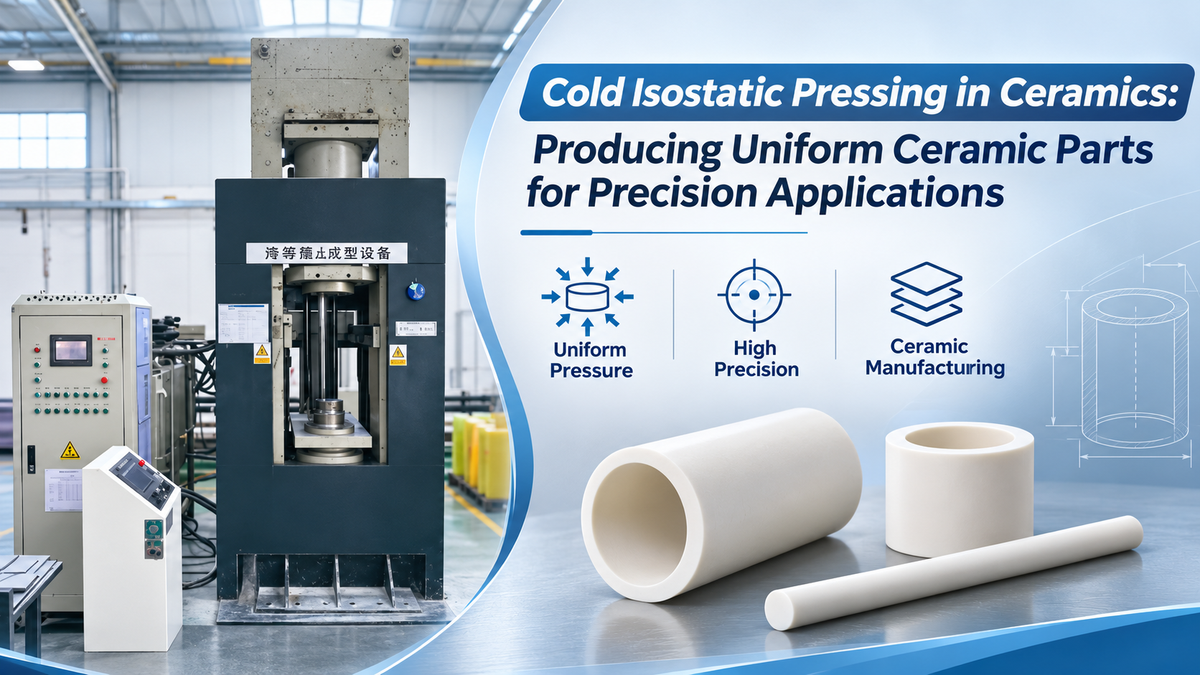
| Cold Isostatic Pressing | Uniformly compacted ceramic blanks and complex bulk shapes | Additional shaping or machining may be needed |
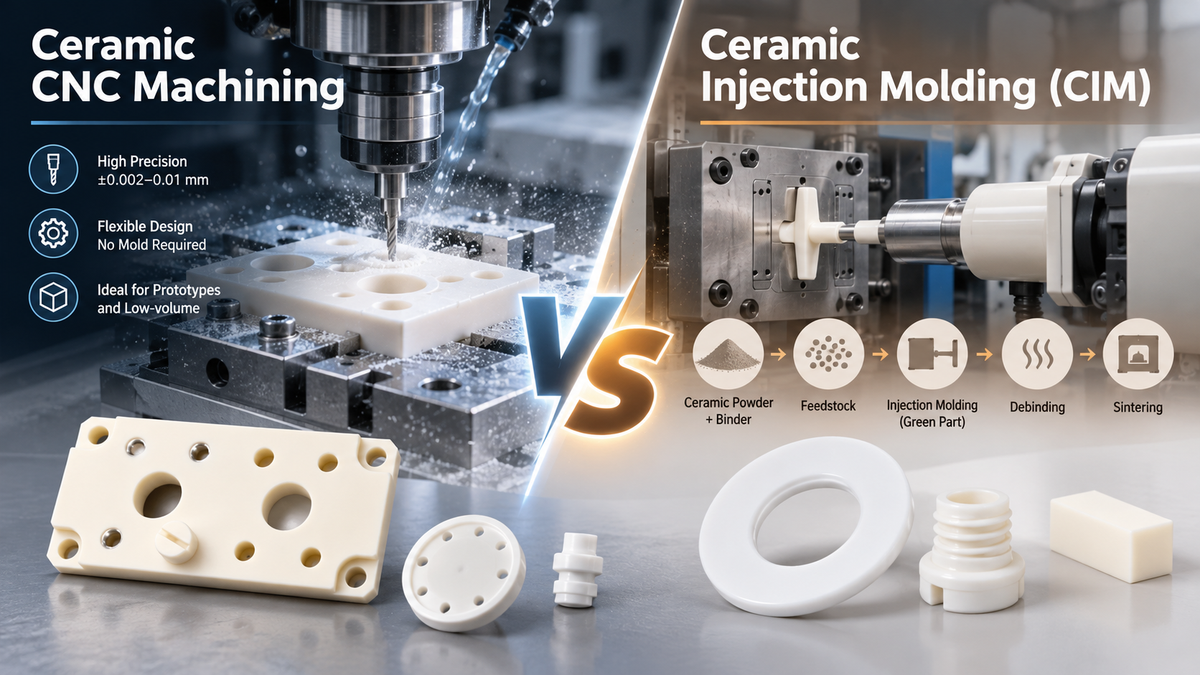
| Ceramic CNC Machining | Prototypes and precision features | Machining time and material waste |
For a simple ceramic disc or block, pressing may be more economical.
For a small component with complicated geometry that needs to be produced repeatedly, CIM may offer a better balance between manufacturing efficiency and dimensional consistency.
For one-off prototypes or features requiring extremely tight tolerances, CNC machining or a combination of forming and precision finishing may be more appropriate.
The right decision should be based on the complete manufacturing cost, not just the price of the initial mould or individual processing step.
7. What Should Engineers Consider Before Choosing CIM?
Before requesting a quotation for ceramic injection moulded parts, it helps to evaluate a few practical design and production factors.
1. Part Geometry
Check wall thickness, internal channels, holes, sharp corners, and transitions between thick and thin sections. Uniform wall thickness is generally easier to process and can help reduce defects.
2. Material Requirements
Define the required mechanical, thermal, electrical, and chemical properties. This makes it easier to select an appropriate ceramic grade.
3. Dimensional Tolerances
Not every dimension needs the same level of precision. Identify critical features and distinguish between as-sintered tolerances and dimensions that require post-processing.
4. Production Quantity
CIM generally becomes more attractive when the initial tooling investment can be distributed across a larger production volume. Prototype requirements and expected annual demand should both be considered.
5. Surface Finish
Specify whether the component requires an as-sintered surface, grinding, polishing, or lapping. These requirements can influence both production planning and cost.
6. Inspection Requirements
For critical applications, discuss dimensional inspection, material verification, and functional testing before production begins.
A clear technical drawing and a 3D model can make this evaluation much more efficient.
8. Ceramic Injection Moulding Services at MIM-Supplier
Choosing a manufacturing partner for ceramic injection moulding involves more than checking whether a supplier has an injection moulding machine.
A reliable production process needs coordinated control over material preparation, mould design, injection, debinding, sintering, and final inspection.
At MIM-Supplier, we support custom ceramic component manufacturing through Ceramic Injection Moulding (CIM) and complementary precision ceramic processing.
Our engineering approach focuses on matching the manufacturing method to the actual requirements of each component. This includes evaluating part geometry, ceramic material selection, dimensional tolerances, surface finish, and production quantity.
Depending on the application, additional operations such as CNC machining, precision grinding, lapping, and polishing can be considered to achieve the required final specifications.
We work with advanced ceramic materials including alumina, zirconia, silicon nitride, silicon carbide, and aluminum nitride for applications across medical devices, semiconductor equipment, optical systems, telecommunications, and industrial machinery.
For projects involving complex ceramic geometries or demanding dimensional requirements, an early design-for-manufacturing (DFM) review can help identify potential production challenges before tooling begins.
If you have a ceramic component that needs to move from design to production, our engineering team can review your drawings and discuss a suitable manufacturing approach.
Contact MIM-Supplier to discuss your custom ceramic injection moulding project.
FAQ
1. What are the main steps in the ceramic injection moulding process?
The process has four main stages: feedstock preparation, injection moulding, debinding, and sintering. Additional finishing operations may be used to achieve the required dimensions and surface quality.
2. What is the difference between CIM and MIM?
CIM stands for Ceramic Injection Moulding, while MIM stands for Metal Injection Moulding. Both use powder mixed with a binder and follow similar processing stages. The main difference is the powder material: CIM uses ceramic powder, while MIM uses metal powder.
3. Which materials can be used for ceramic injection moulding?
Common materials include alumina, zirconia, silicon nitride, silicon carbide, and aluminum nitride. Material selection depends on the component's mechanical, thermal, electrical, and chemical requirements.
4. Is ceramic injection moulding suitable for mass production?
Yes. CIM is particularly suitable for medium- and high-volume production of small, complex ceramic components. Once tooling and processing parameters are established, the process can provide repeatable part geometry and production consistency.
5. Why is debinding important in CIM?
Debinding removes the temporary binder from the moulded component before sintering. If the binder is removed too quickly or unevenly, the part may develop cracks, distortion, or internal defects.
6. Does ceramic injection moulding require post-processing?
Not always. Some components can be used after sintering, while others require grinding, CNC machining, lapping, or polishing to achieve tighter tolerances or specific surface finishes.
7. How can I get a quotation for custom ceramic injection moulded parts?
Prepare your 2D engineering drawings or 3D CAD files, together with the preferred ceramic material, required quantity, dimensional tolerances, and application details. These details help the manufacturer evaluate feasibility, recommend a suitable process, and prepare a more accurate quotation.
Final Note
The ceramic injection moulding process is not simply about putting ceramic powder into a mould. Its success depends on controlling the entire transition from feedstock to green part, brown part, and finally a fully sintered ceramic component.
For manufacturers and buyers working with complex precision ceramics, understanding these stages makes it easier to evaluate production feasibility, identify potential quality risks, and select the right manufacturing partner.
Teilen:
Powder Metallurgy vs Casting: How to Choose the Right Process